Executive Summary: Sprayable Liquid Rubber vs. Cast Vinyl Films
When transforming the visual personality of a high-value automobile in Dubai, permanent repainting is almost never the answer—doing so instantly destroys original factory provenance and reduces market resale value. Car owners frequently compare peelable paint (sprayable liquid rubber/polyurethane) and cast vinyl wraps as if they were interchangeable alternatives. In reality, their physical makeup, thermal endurance under Dubai's 50°C summer sun, and removal dynamics could not be more different.
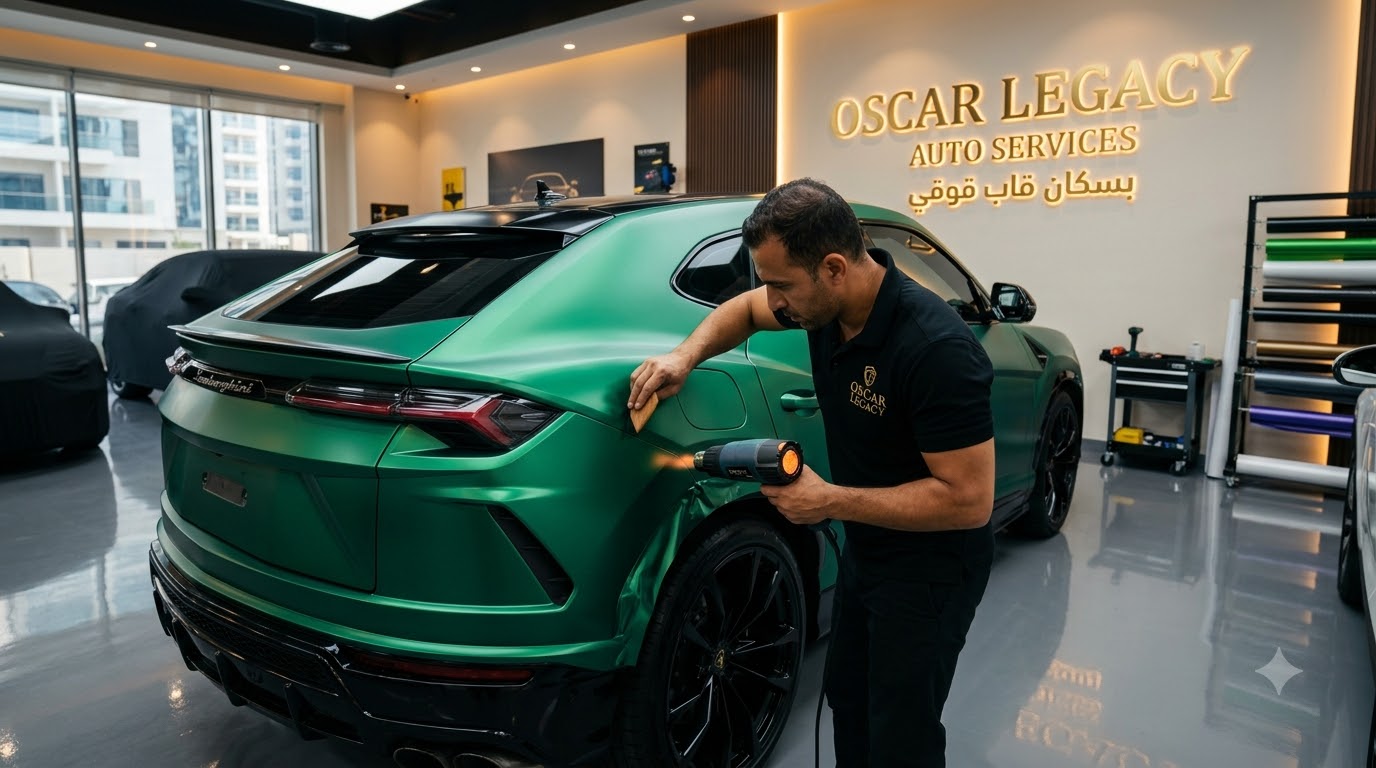
Cast vinyl replicates deep OEM mirror gloss or flawless satin frozen paint. Peelable spray displays a subtle rubbery orange peel texture up close.
Premium cast vinyl lasts 3 to 4 years outdoors in Dubai. Liquid peelable coatings dry out and become brittle in 6 to 12 months under extreme UV.
Sun-baked peelable coatings shatter into tiny fragments requiring painful scraping; cast vinyl releases cleanly with steam without harming factory clear coat.
The Fundamental Material Divergence
Understanding the physical differences between these two styling mediums explains why one costs significantly more and lasts three times longer:
What Peelable Paint Actually Is
A synthetic rubber or elastomeric polyurethane liquid coating applied via automotive spray guns in 5 to 7 cross-coats. It forms a physical mechanical grip on top of vehicle clear coat rather than bonding chemically.
- Ideal Application: Complex intricate shapes like alloy wheel spokes, front mesh grilles, and exhaust tips.
- The Limitation: Difficult to achieve deep mirror clarity across large horizontal panels (bonnet, roof).
What a Cast Vinyl Wrap Actually Is
A high-performance solid polyvinyl chloride (PVC) sheet cast in state-of-the-art factories, engineered with air-release adhesive channels. Installers hand-stretch and mold it around panels using calibrated heat and tucked edges.
- Finish Spectrum: Over 400 finishes including ultra-gloss metallics, brushed metals, carbon textures, and color-shifts.
- The Advantage: True panel protection against sandblast pitting, bird lime, and surface scratches.
Peelable Paint vs Wrap: Side-by-Side Comparison
Analyze how both options perform against the grueling environmental demands of Dubai and the UAE:
| Evaluation Factor | Peelable Paint (Spray Coating) | Cast Vinyl Car Wrap (3M / Avery) | Dubai Real-World Verdict |
|---|---|---|---|
| Finish Authenticity | Good in satin; subtle orange peel in gloss | Showroom mirror gloss, satin & custom textures | Wrap looks 100% like real paint from 1 foot away |
| Color & Finish Variety | Solid colors, satin, tintable metallics | Hundreds of pearlescent, satin, and chrome hues | Vinyl offers boundless design customizability |
| UAE Sun & Heat Lifespan | 6 – 12 Months before UV embrittlement | 3 – 4 Years outdoors (5+ years garaged) | Vinyl lasts 3 to 4 times longer under Gulf sun |
| Impact & Sand Protection | Minimal stone chip defense; tears easily | Substantial 3.5 – 4.0 mil barrier against sand | Vinyl reliably shields clear coat on motorways |
| Removal Dynamics | Fragments into tiny chips if baked by sun | Peels away cleanly in full sheets with steam | Old peelable paint can be a nightmare to scrape |
| Best Suited Areas | Alloy wheels, badges, front grilles, diffusers | Full vehicle body, doors, bonnet, roof, spoilers | Hybrid: Spray for wheels; Wrap for body |
| Typical Cost in Dubai | Variable by Paintshop | Inquire on WhatsApp → | Wrap reflects premium film & disassembly labor |
Zero-Cut, Fully Tucked Craftsmanship
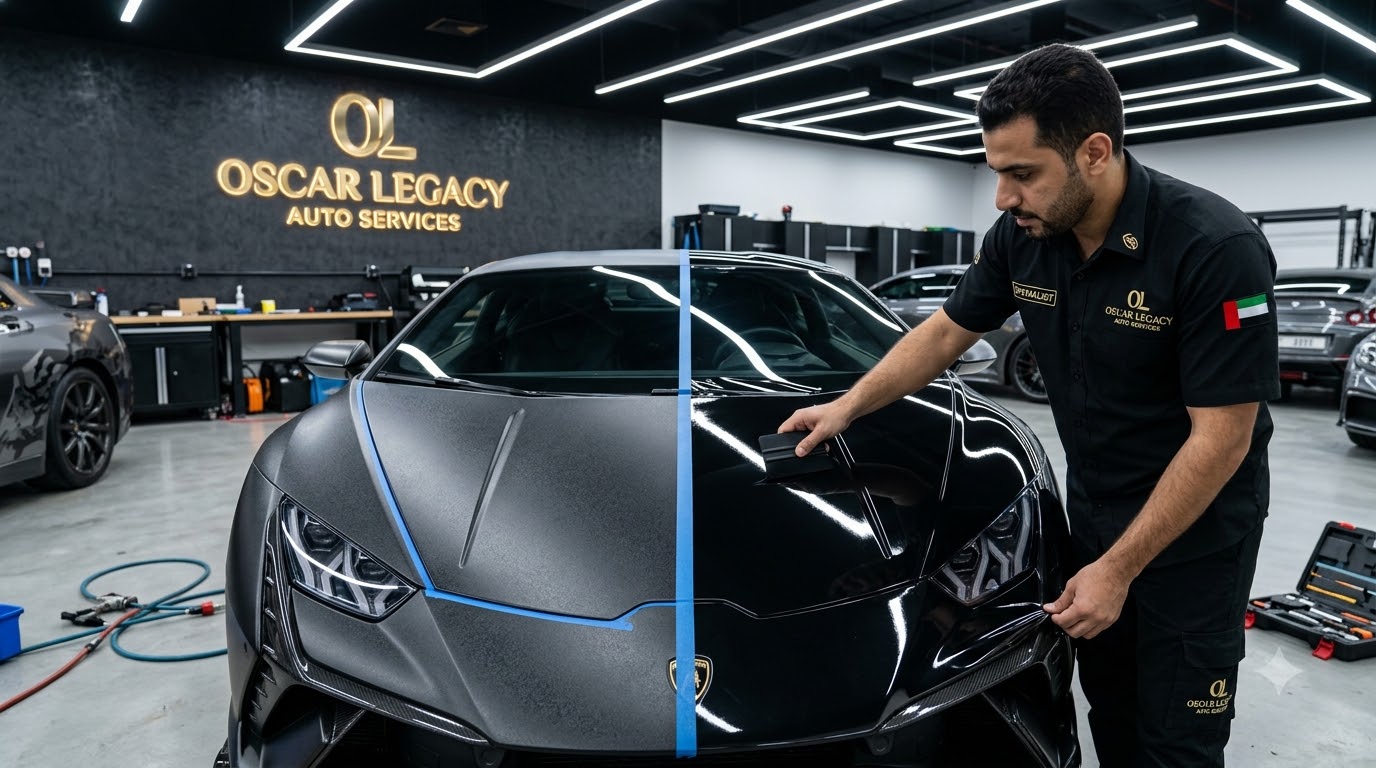
At Oscar Legacy Auto Services, our wrapping studio treats every vehicle as fine sculpture. We disassemble door handles, taillights, badges, and mirror caps so every edge is tucked 15mm behind panels—ensuring zero visible original paint borders and zero risk of high-speed highway peeling.
- Post-heating to 90°C to permanently lock film memory and prevent lift
- Knifeless tape contouring for 100% razor-free cutting
- Complete official RTA color-change certificate assistance
The Final Verdict: What Truly Belongs on a Luxury Car?
For high-end marques (Porsche, Bentley, Rolls-Royce, Ferrari, Mercedes-AMG, Range Rover), a professional cast vinyl wrap is overwhelmingly the superior investment.
The Smart Hybrid Approach:
The ideal configuration deployed by Oscar Legacy Auto Services clients is a tailored hybrid: premium cast vinyl wrap or colored PPF across all exterior painted body panels to ensure flawless depth, longevity, and rock-chip defense, combined with specialized peelable ceramic spray on alloy wheels and exhaust heat shrouds where extreme brake dust heat and intricate geometries make vinyl wrapping impractical.
Frequently Asked Questions
Transform Your Vehicle with Bespoke Luxury Styling
Whether you desire a full satin color shift, deep metallic cast vinyl wrap, or wheel de-chroming, Oscar Legacy Auto Services delivers perfection in Dubai. Visit our atelier or contact our master installers today.