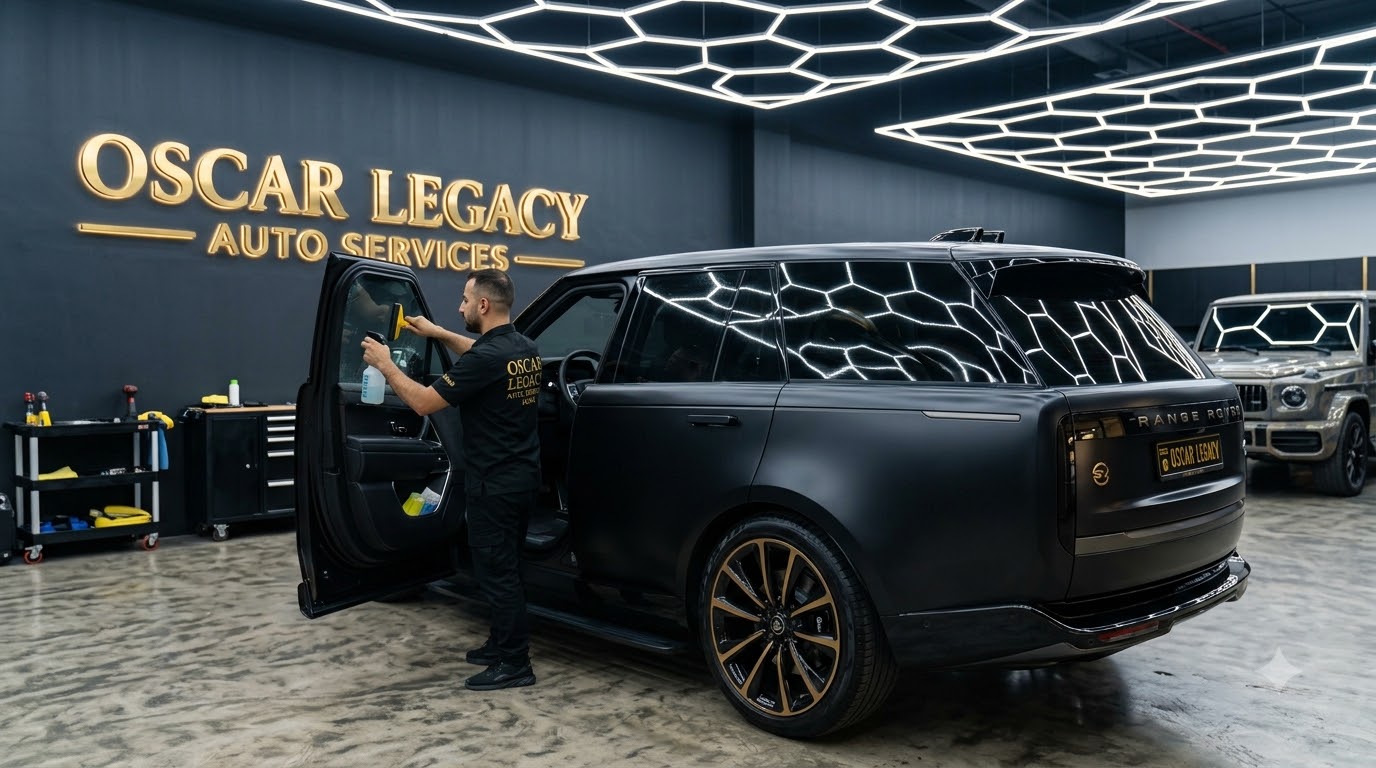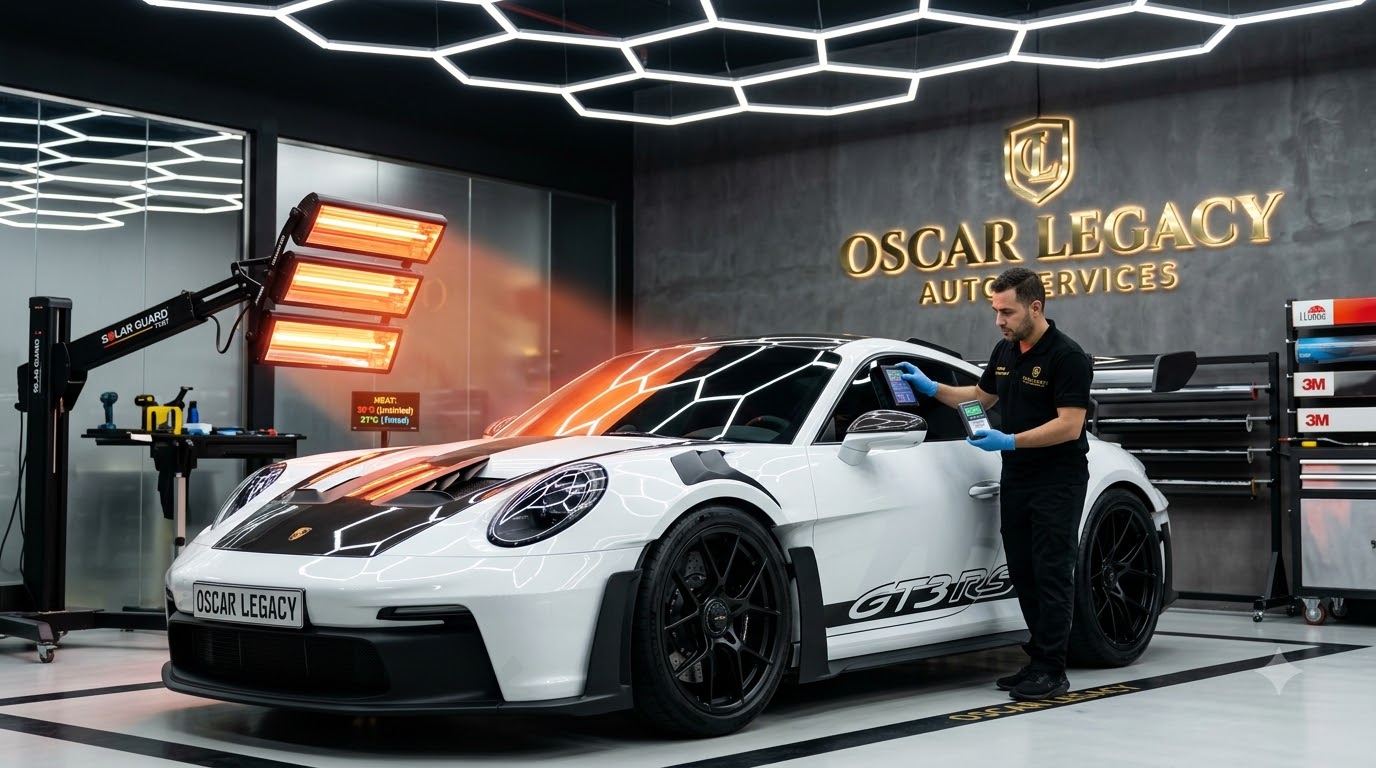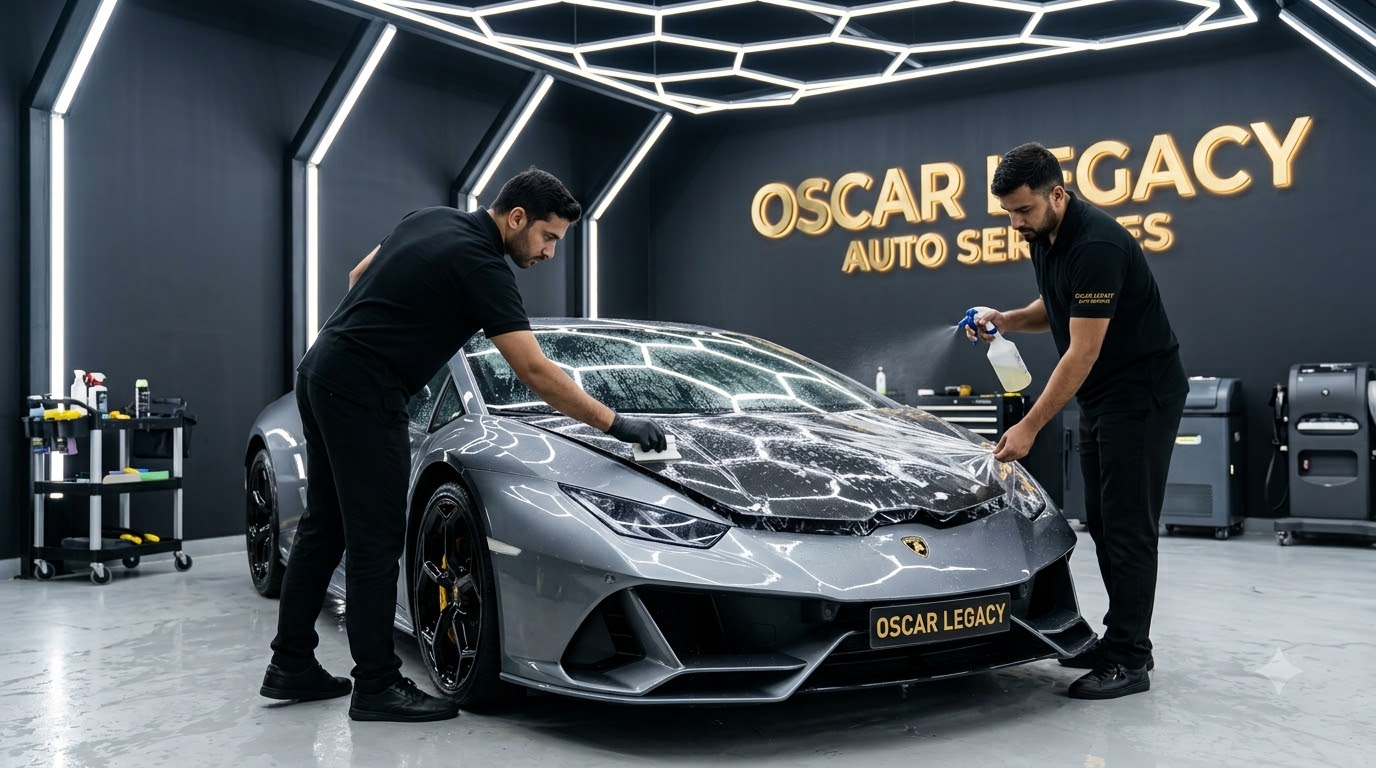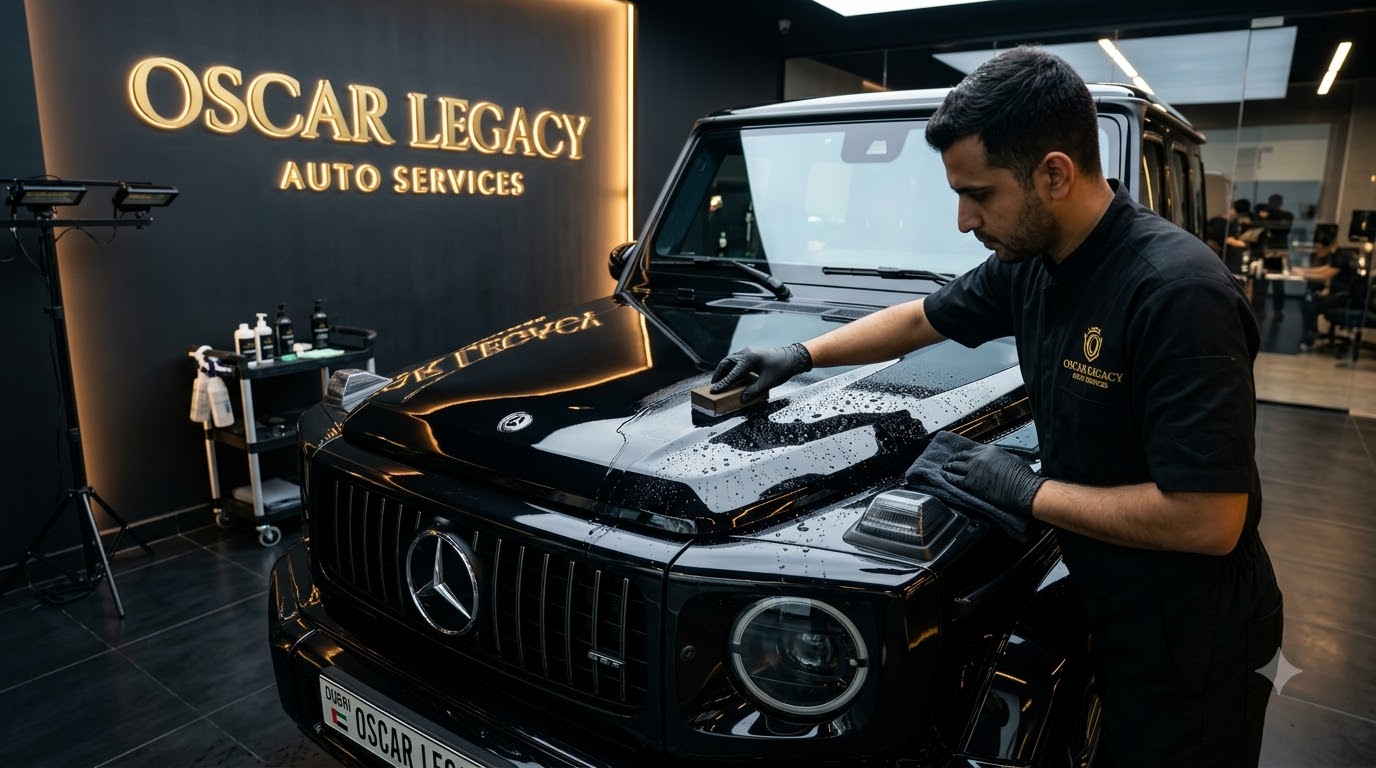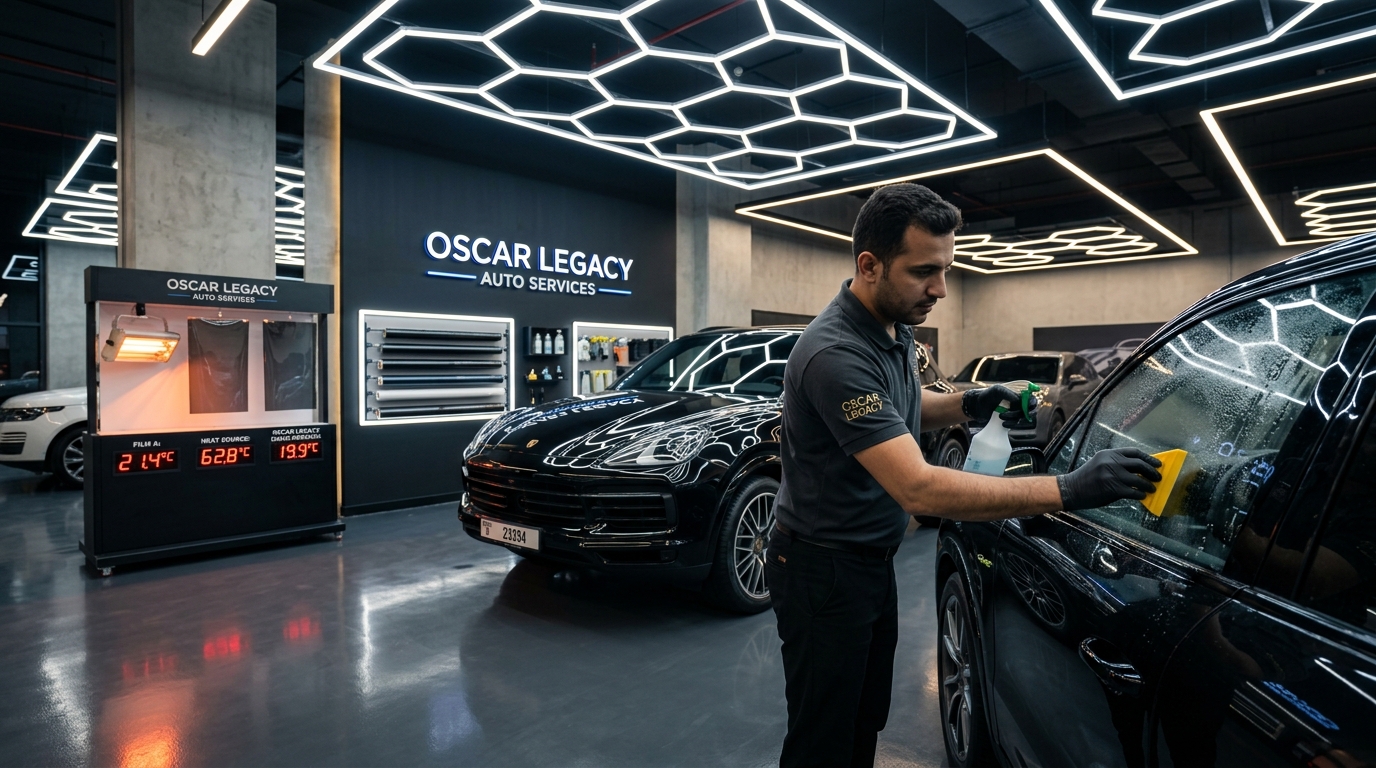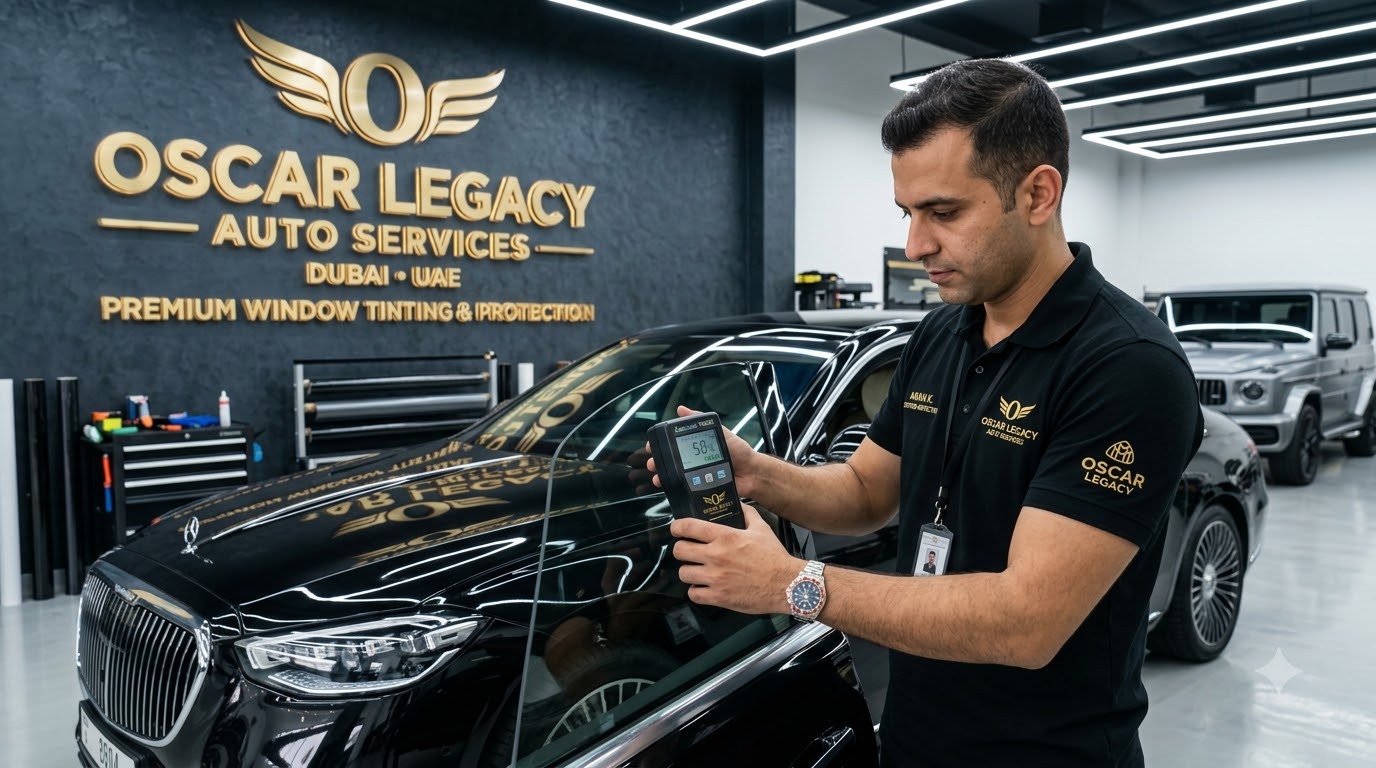
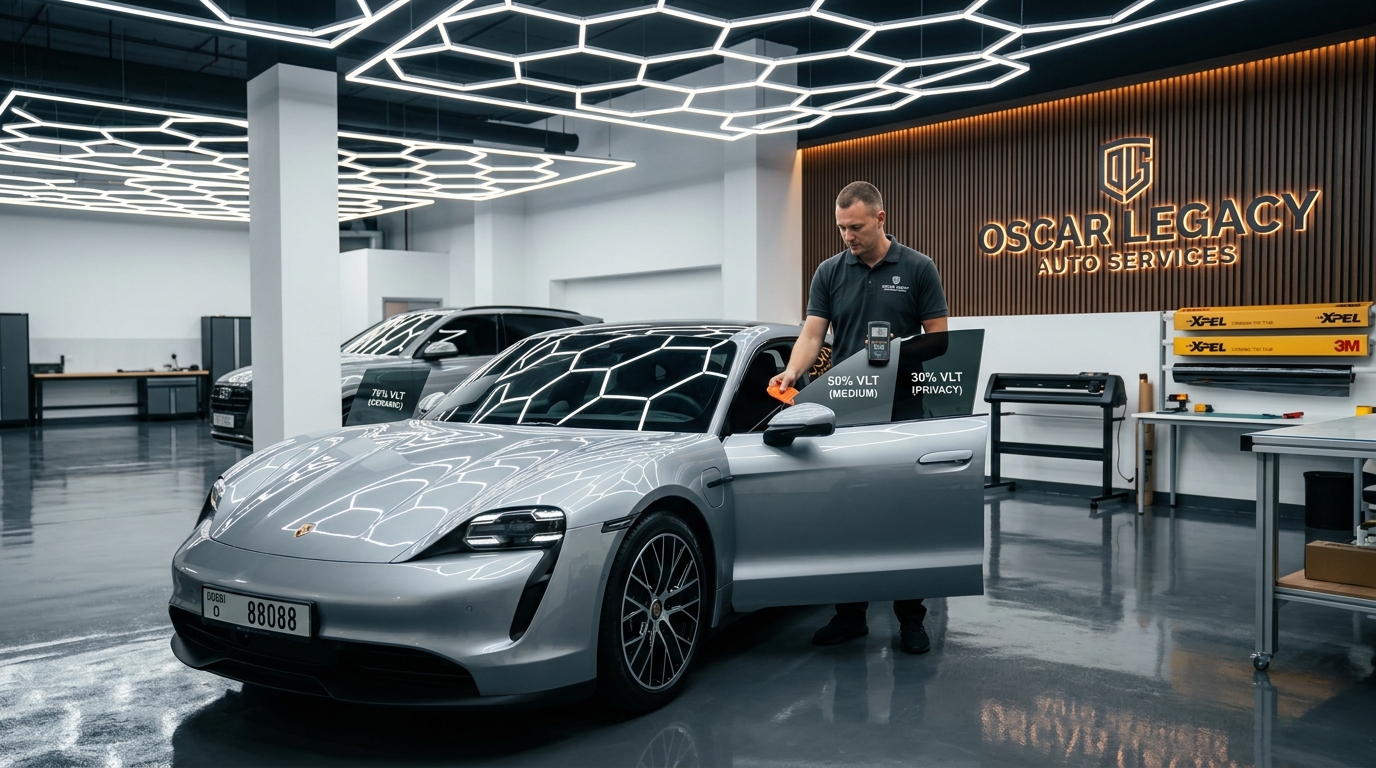
If you've ever opened your car after it sat in an open car park in the middle of a Dubai summer, you know how bad it gets. The steering wheel is too hot to hold, the leather burns, and the AC needs ten minutes before the cabin is bearable. That's why so many drivers here see window tinting as a necessity rather than an optional extra. The hard part is choosing a shade. Most people narrow it down to 30%, 50%, or 70% and assume the darkest one keeps the car coolest. However, darkness alone tells you very little about heat performance. At Oscar Legacy Auto Services, we explain how advanced nano-ceramic films reject intense solar heat while preserving crystal-clear optical clarity.
1. First, What Does the Percentage Actually Mean?
Tint percentages refer to Visible Light Transmission (VLT) — the proportion of visible light that passes through the glass. A higher VLT lets more light in, while a lower VLT creates a darker window:
- 70% VLT: Lets most light through and looks close to clear.
- 50% VLT: Lets in about half the visible light, producing a noticeable but balanced shade.
- 30% VLT: Lets in less than a third of visible light and looks clearly dark.
In Dubai, beware of conflicting terminology: Some shops describe films by how much light they block rather than how much they transmit. A film marketed as “70% tint” might actually be 70% dark (30% VLT). Always ask the installer for the audited VLT specification. Furthermore, factory automotive glass usually has an inherent 75%–85% VLT, meaning the finished window will be slightly darker than the film's standalone rating.
2. The Three Shades Side by Side
| Performance Attribute | 30% VLT (Dark) | 50% VLT (Medium) | 70% VLT (Light Ceramic) |
|---|---|---|---|
| Visual Appearance | Dark & Stealthy | Medium Balanced | Very Light / Nearly Clear |
| Visible Light Transmitted | 30% Light | 50% Light | 70% Light |
| Daytime Privacy | High Privacy | Moderate Privacy | Low / Factory View |
| Nighttime Visibility | Noticeably Restricted | Good Everyday Clarity | Best Clarity |
| Glare Reduction | Strong | Moderate | Mild |
| Heat Rejection (IR/TSER) | Depends on Film Technology | High with Ceramic | High with Ceramic |
Note: This comparison reflects visual transparency and driving ergonomics. True heat rejection depends on the underlying film chemistry (dyed vs carbon vs nano-ceramic) rather than darkness alone.
3. 30% VLT: Dark and Private
This shade delivers the popular “blacked-out” aesthetic. During daylight hours, it cuts intense sun glare effectively and prevents pedestrians from seeing inside. However, the downside becomes apparent after sunset: reversing into dimly lit basement parking, checking wing mirrors on unlit desert roads, or spotting pedestrians becomes significantly harder. Additionally, when combined with factory glass, a 30% VLT film often drops total window transparency below UAE statutory limits.
4. 50% VLT: The Middle Ground
For most Dubai motorists, 50% VLT represents the ideal everyday compromise. The glass looks elegantly tinted with respectable daytime privacy, yet nighttime mirror visibility remains comfortable. When paired with high-grade nano-ceramic technology, 50% film blocks massive quantities of infrared heat without causing visual strain.
5. 70% VLT: Light Ceramic Film
A 70% VLT film is subtle and almost imperceptible from factory untinted glass. While it provides minimal privacy, night visibility remains completely uncompromised. Importantly, high-tier 70% ceramic films still block over 99% of UV rays and up to 85%+ of infrared heat, making them an exceptional choice for drivers who prioritize safety and OEM elegance.
Oscar Legacy Studio Diagnostic: Film Solar Physics
Benchmarking VLT, Infrared Rejection (IRR), and Total Solar Energy Rejection (TSER)
6. What Does UAE Law Allow?
Under Federal UAE traffic laws, eligible private passenger vehicles are permitted up to 50% tint on side and rear windows (raised from 30% in 2017). The front windscreen must remain completely untinted, apart from a narrow permitted sunstrip along the top. Crucially, Dubai Police and RTA inspection devices measure the finished window's net VLT. Installing a 50% film over factory-tinted glass can result in an illegal 40% net reading, risking fines.
7. How Tint Affects Driving at Night
While dark windows feel relaxing under midday glare, they restrict critical light when driving after dark. Looking through dark side windows obscures wing mirrors, making highway lane changes and unlit reversing hazardous. A 70% or high-clarity 50% film offers substantially greater nighttime safety than 30% shades.
8. Darker Tint Doesn't Mean Cooler
Basic dyed films merely absorb visible light while allowing infrared heat to pour through. In contrast, 3M Ceramic IR specifications illustrate that a light 70% film achieves around 51% TSER, while a dark 30% film achieves around 60% TSER. The 9% heat reduction advantage of the dark film comes at the heavy price of lost night visibility. Always compare published TSER and IRR metrics rather than darkness.
9. Why Light Ceramic Film Suits Luxury Cars
Owners of Mercedes-Maybach, Rolls-Royce, Porsche, Bentley, and Range Rover frequently prefer light 70% ceramic films. It maintains the vehicle's original factory prestige, stops severe UV leather degradation, provides effortless nighttime sight, and contains zero metallized layers that could compromise electronic sensors or navigation.
10. So, Which Shade Should You Choose?
- If Privacy Is Your Main Priority: Choose 30%–50% VLT, ensuring your finished glass does not breach legal thresholds.
- If You Want Everyday Balance: Choose 50% VLT in nano-ceramic for an attractive tint, solid night vision, and great heat defense.
- If You Value Maximum Night Safety & OEM Elegance: Choose 70% VLT nano-ceramic to keep your car cool while preserving crystal-clear visibility.
See the Shades on Your Own Car
Photos cannot replicate how tint looks against your car's interior. Visit our studio to inspect tint swatches against your glass, experience our heat-box demo, and get a tailored quote.
12. Frequently Asked Questions
Is 50% tint legal in Dubai?
Eligible private passenger vehicles are generally allowed up to 50% tint on the side and rear windows. However, this refers to the finished window, not just the film's own rating. Check the rules that apply to your vehicle before installation.
Is 30% tint too dark for driving at night?
It can be. With only 30% of light passing through, side and rear visibility drops noticeably in poorly lit areas. Consider both safety and the legal limit before choosing a shade this dark.
Is 70% ceramic tint basically clear?
Very nearly. A genuine 70% VLT film is light and subtle, and with the right ceramic technology it can still block a good share of heat and UV.
Does 50% tint block 50% of the heat?
No. Darkness and heat rejection are measured separately. To judge how well a film handles heat, check its TSER and IRR figures.
What's the best tint percentage for Dubai?
It depends on how much privacy you want, how often you drive at night, your car's factory glass and the local regulations. A quality ceramic film at a suitable shade is usually a better investment than simply choosing the darkest option.
Bespoke automotive tinting at Oscar Legacy Auto Services: optical clarity and advanced solar thermal engineering tailored for the Dubai climate.