Ask most drivers in Dubai what they'd change about their car in August, and plenty will say the same thing: the windshield. It's the largest glass surface on your vehicle, it faces the blazing sun head-on, and it turns your dashboard into a scorching hotplate by noon. Consequently, 70% clear ceramic film has surged in popularity — it appears virtually transparent, yet promises to deflect substantial solar heat. But can you legally apply it to your front windshield in the UAE? The short answer: not without express permission. At Oscar Legacy Auto Services, we break down the statutory regulations, thermal physics, and compliant alternatives.
1. The Quick Answer: UAE Windshield Tint Regulations
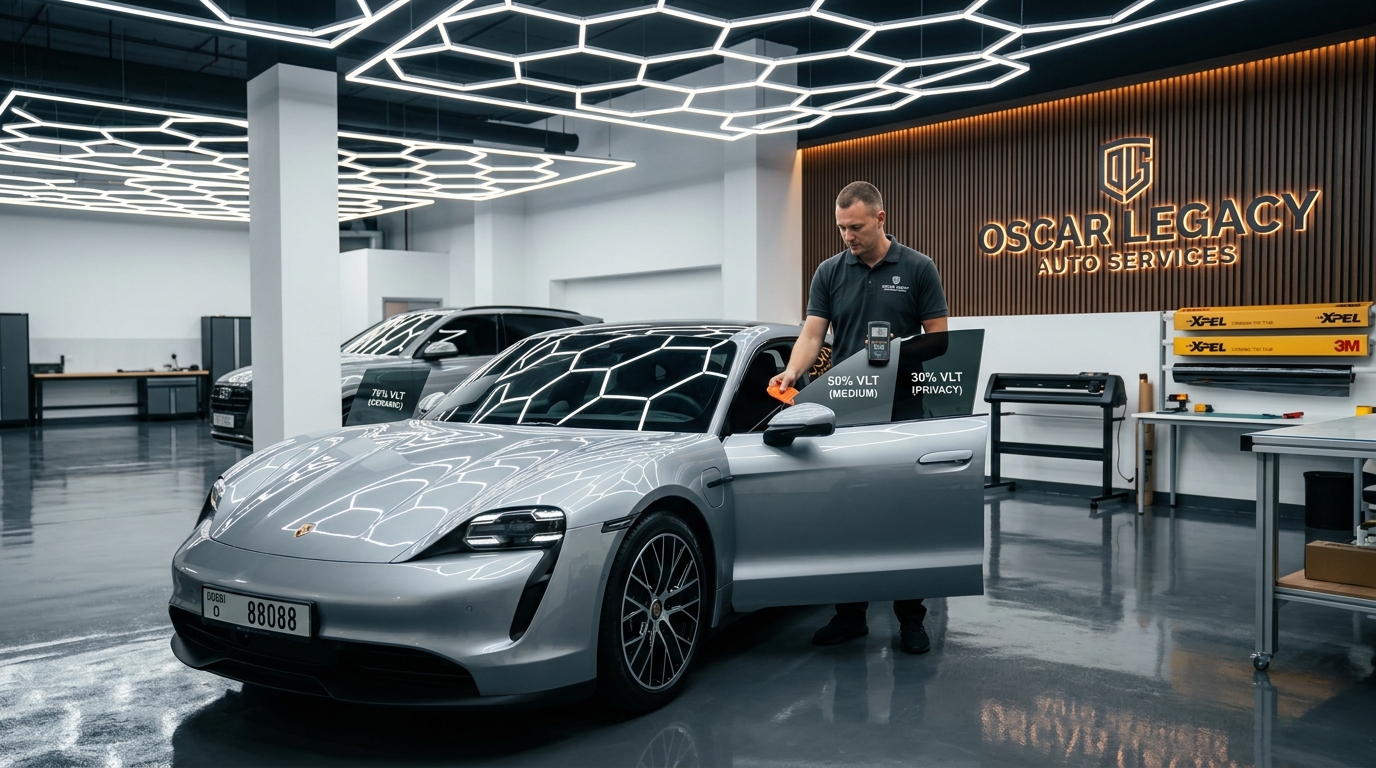
In the UAE, motorists are generally permitted to tint eligible side and rear passenger windows up to 50% darkness. However, the front windshield is governed by far stricter regulations. Under Dubai's Decree No. 30 of 2023, tinting a front windshield without an official permit is explicitly classified as an offense warranting vehicle impoundment. The fact that a film is virtually transparent (such as 70% VLT clear ceramic) does not grant an automatic legal exemption.
Dubai Police have historically confirmed that an upper sunshade visor strip of approximately 15 cm along the top edge of the windshield is acceptable. Nonetheless, drivers installing unauthorized full-windshield films face severe penalties, including an AED 1,500 traffic fine and an AED 10,000 impoundment release fee. The safest approach is always obtaining official written confirmation from relevant licensing authorities prior to any aftermarket glass installation.
2. What Does “70% VLT” Actually Mean?
VLT stands for Visible Light Transmission — the exact proportion of visible light that passes through a glazed surface. A standalone 70% VLT film transmits roughly 70% of ambient light while rejecting 30%.
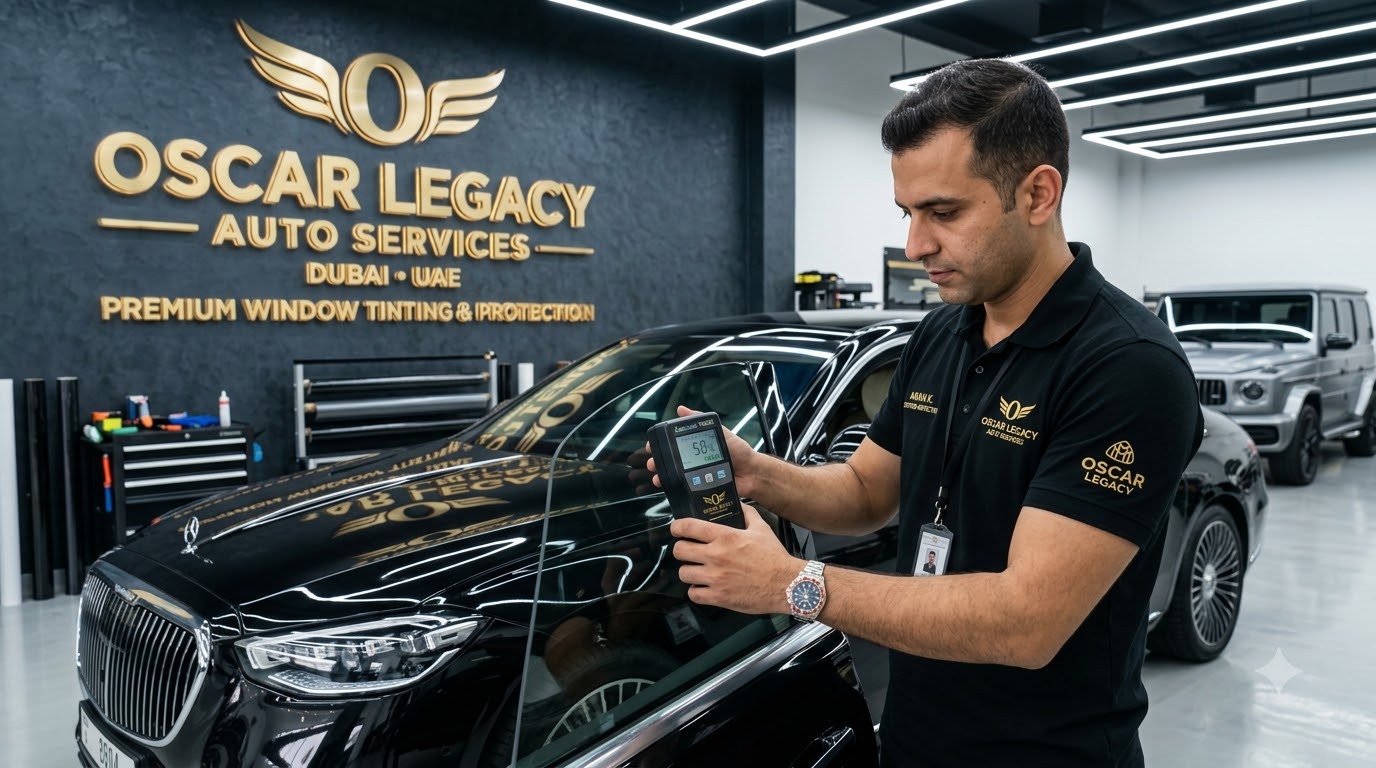
Crucially, automotive windshields are not 100% clear from the factory; standard OEM glass typically absorbs 15%–25% of visible light on its own. When a 70% VLT film is applied onto factory automotive glass, the net combined transparency drops below the printed specification (often landing around 55%–58% net VLT). Professional installers at Oscar Legacy Auto Services measure the combined optical assembly with digital VLT meters rather than relying on packaging labels.
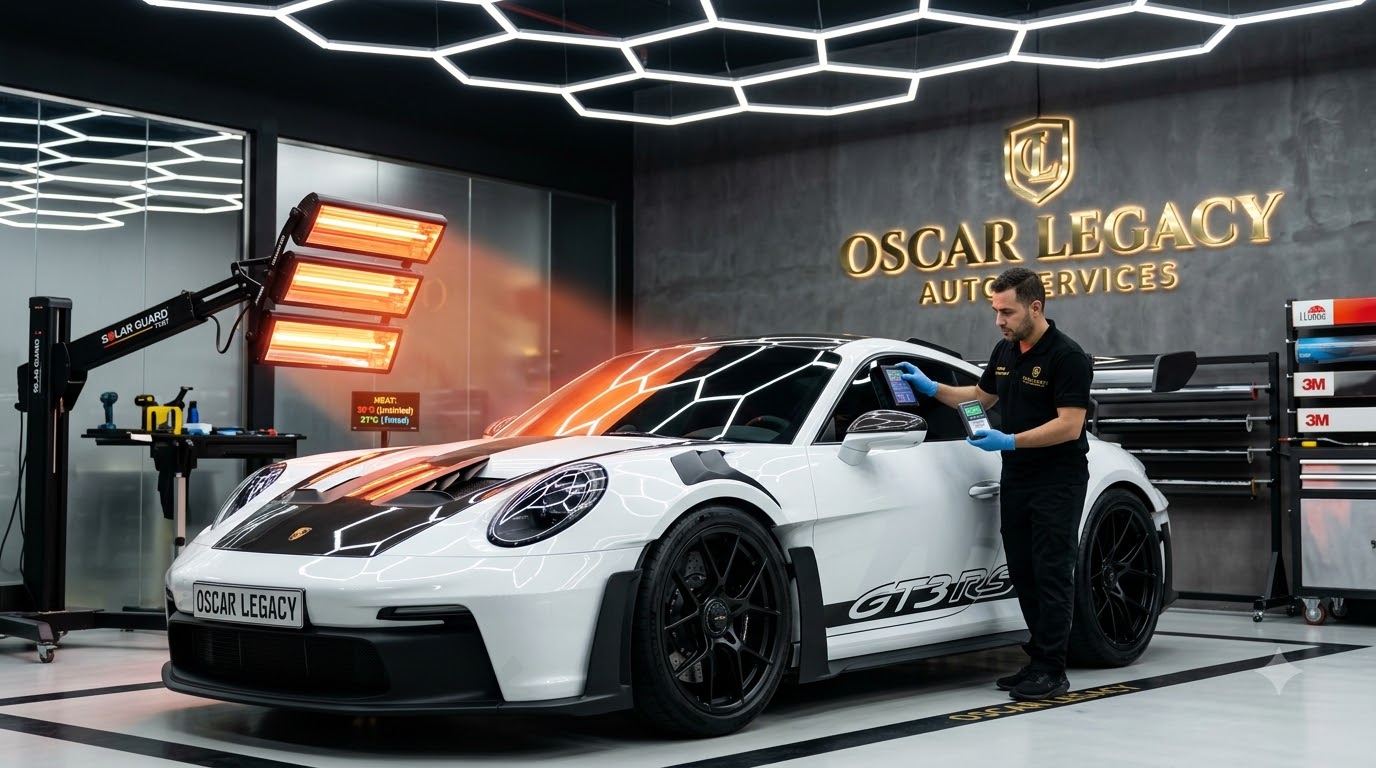
Oscar Legacy Studio Diagnostic: Front Glass Solar Physics
Engineering Benchmarks for High-Clarity Optical Ceramic Films
3. How a Nearly Clear Film Can Still Block Heat
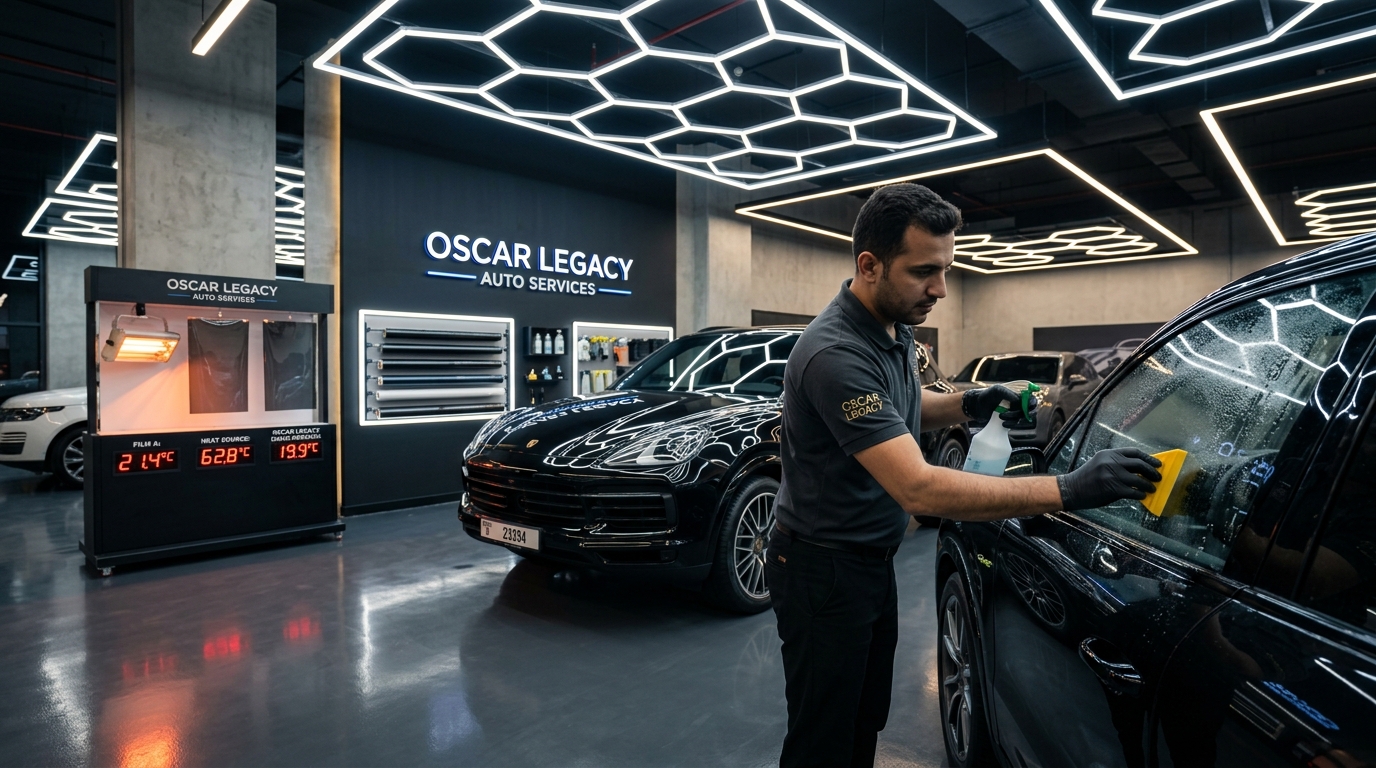
Legacy dyed films functioned primarily by absorbing visible light through dark pigments. Contemporary nano-ceramic and spectrally selective films operate on advanced solar physics, selectively filtering destructive radiation while admitting crystal-clear visible light:
- UV Protection of >99%: Premium films intercept 99% or more of harmful ultraviolet rays, safeguarding your expensive leather dashboard, steering wheel stitching, and passenger skin.
- Infrared Rejection vs TSER: While manufacturers frequently advertise 95% to 97% Infrared Rejection (IRR), this metric measures a narrow infrared band. For instance, 3M Crystalline CR 70 delivers 97% IRR yet yields a Total Solar Energy Rejection (TSER) of 51% on tested glass. TSER represents the true measure of thermal relief.
- Prestige Aesthetics: Clear ceramic film maintains the elegant, original factory look of luxury vehicles — delivering cabin cooling without dark limousine-style glass.
4. Will It Really Cool Your Dashboard by 15°C?
Marketing claims often suggest ceramic film drops cabin temperatures by up to 15°C. While intercepting solar radiation prevents dashboards and leather steering wheels from transforming into scorching thermal heat sinks, real-world cooling depends heavily on vehicle color, parking orientation, duration of direct sun exposure, and glass surface area. Clear ceramic film noticeably reduces immediate thermal soak, easing the burden on your AC compressor, but parked vehicles in 50°C desert heat will still equalize over extended periods.
5. Will Clear Ceramic Film Pass an RTA Vehicle Inspection?
Not automatically. Annual vehicle roadworthiness inspections verify strict statutory compliance. Even when a film is virtually invisible, testing inspectors equipped with optical VLT meters can detect aftermarket films and fail the inspection if an official permit is absent.
A reputable detailing studio will always verify current legal standards, test combined glass VLT, verify that front films do not obstruct ADAS forward cameras or rain sensors, and advise on compliant alternatives — such as high-performance legal ceramic tint across eligible side and rear glass.
6. Why Installation Quality Matters
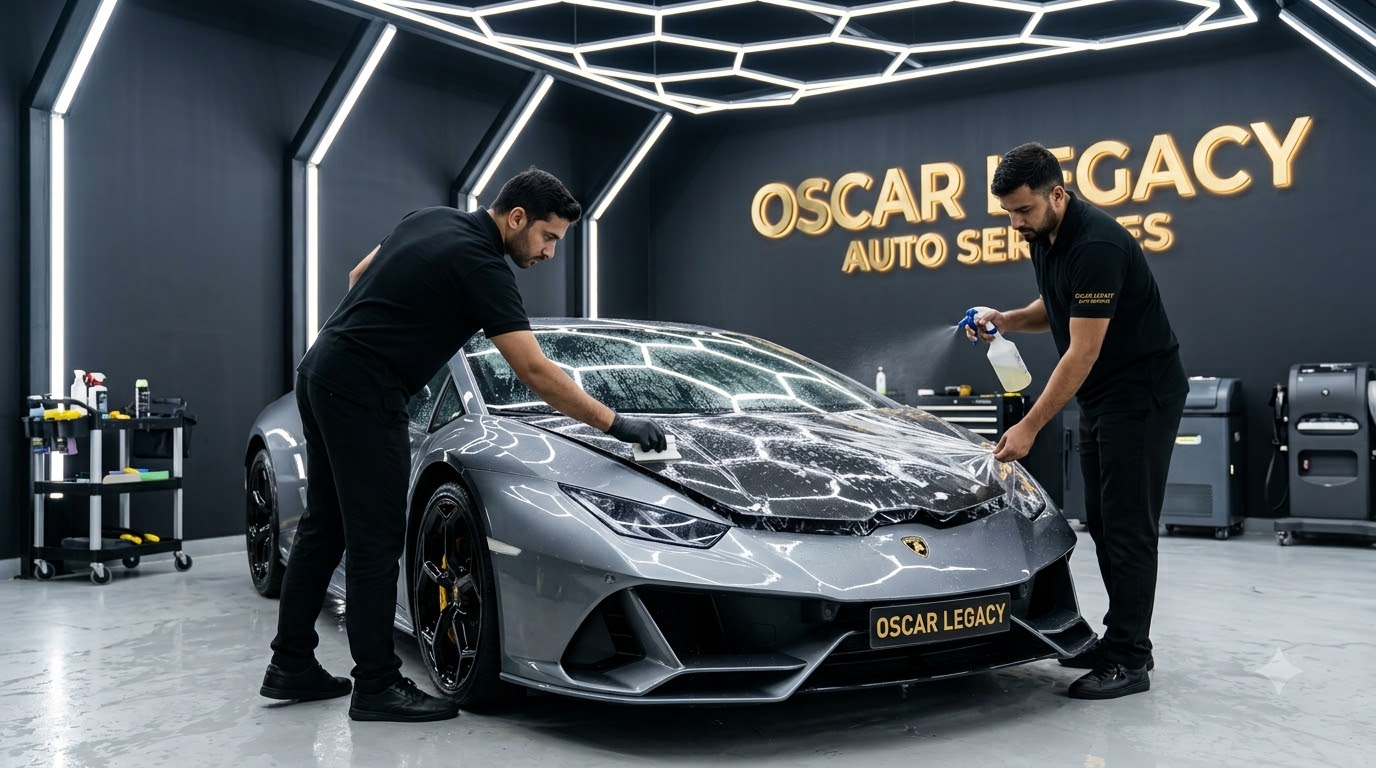
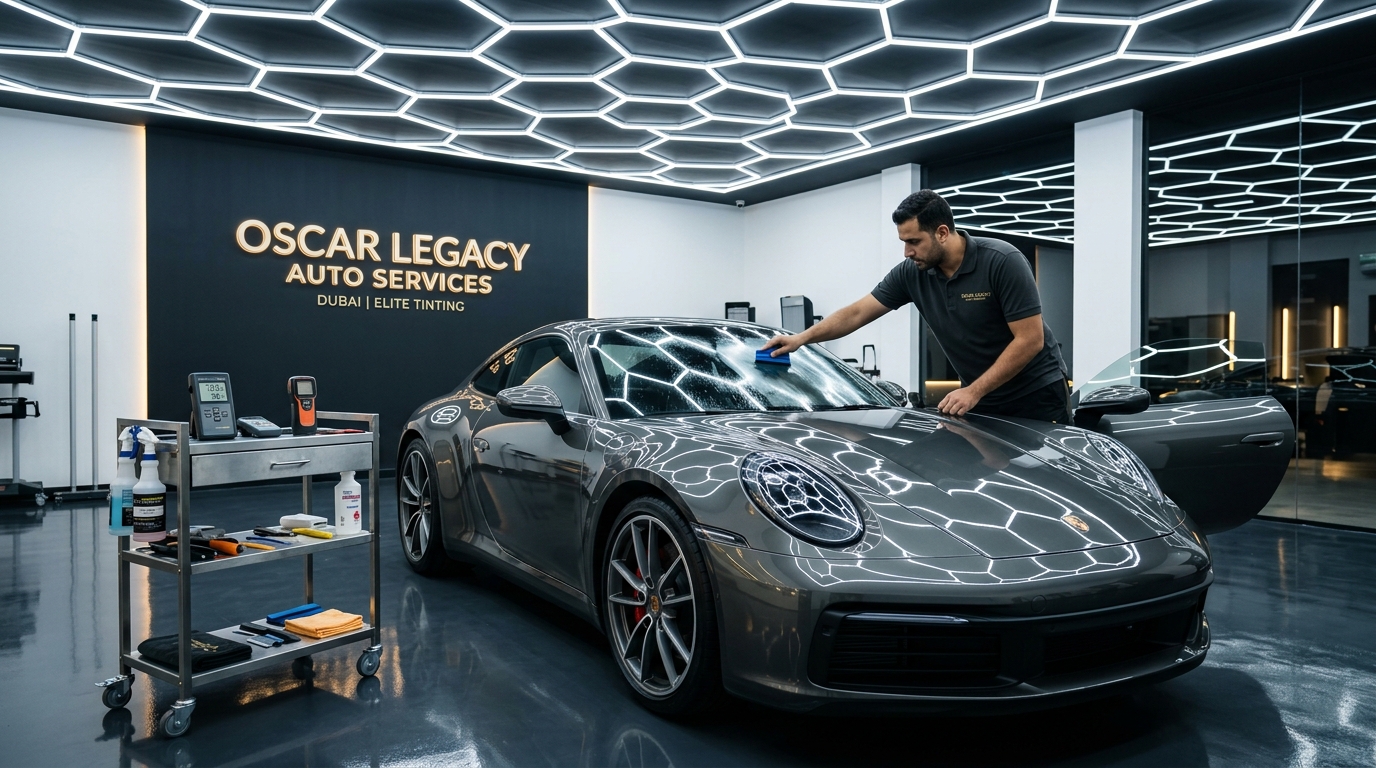
Front windshield installation demands exceptional cleanroom precision. Because drivers look directly through this glass continuously, any airborne dust contamination, micro-bubbles, water hazing, or heat-shrink distortion severely impairs optical safety. Master technicians at Oscar Legacy Auto Services utilize specialized slip solutions and lint-free cleanrooms to guarantee pristine optical clarity.
Keep Cool, Stay 100% Legal
Unsure which window tinting solution suits your vehicle? Contact our tint masters for a compliance check, optical clarity demonstration, and honest advice on legal ceramic options.
7. Frequently Asked Questions
Is 70% VLT ceramic tint legal on the whole front windshield in Dubai?
Not automatically. Dubai's impoundment rules specifically mention full-windshield tinting without a permit. Get confirmation, and any permission you need, before installing.
Can clear ceramic film really block 99% of UV and 95% of infrared?
Some premium films do report figures like these from their manufacturers, but performance varies from product to product. Always check the specific film's data, the wavelengths used in testing and its total solar energy rejection.
Will clear tint affect driving at night?
Any film that reduces visible light transmission cuts down the light reaching your eyes to some degree. The film's quality, reflection, haze and the condition of your existing glass all play a part too.
Is ceramic tint guaranteed to pass vehicle testing?
No. Whether it passes depends on the regulations that apply, any permissions you hold and the condition of the car once the film is fitted.
Professional automotive solar defense at Oscar Legacy Auto Services: advanced nano-ceramic engineering tailored for the Dubai climate.